
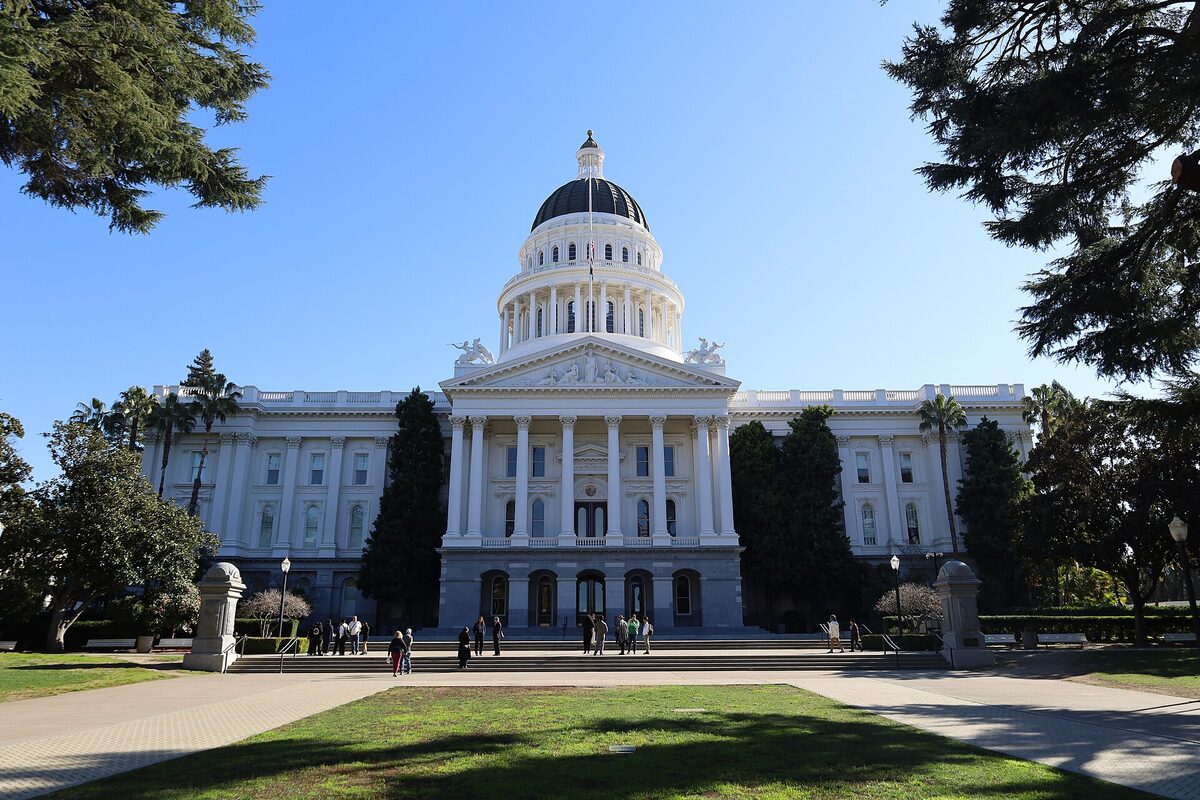
California Gov. Gavin Newsom signed seven bills on Monday, Sept. 21, 2026, that set new rules for how data centers in the state pay for electricity infrastructure, disclose water use and move through environmental review. The governor's office announced the package as the "most comprehensive data center laws in the nation."
The bills, as listed by the governor's office with their authors, are:
- AB 1577 (Bauer-Kahan): data center reporting
- AB 2383 (Zbur): electricity
- AB 2469 (Papan): water use disclosures
- AB 2619 (Papan): water resources
- SB 886 (Padilla and McNerney): the California Technology Innovation and Ratepayer Protection Act
- SB 887 (Padilla): CEQA rules for environmental leadership development projects involving data centers
- SB 1168 (McNerney): rate structures
In the announcement, Newsom said, "With these laws, we are ensuring that Californians remain in the driver's seat," and added that "we don't have to sell out Californians or sacrifice our well-being to innovate and succeed."
The governor's office grouped the package into three areas. On electricity, data centers are to pay their share of grid upgrade costs without shifting costs onto low-income customers, comply with state energy procurement rules and help bring new clean energy onto the grid. On water, proposed data centers are to give local governments and water suppliers information on water use, supply, efficiency and drought planning, and pay for any upgrades needed to supply their water. On land use, data centers would no longer qualify for blanket environmental exemptions and would have to show they will not shift costs to ratepayers and will meet state energy, water and fuel standards before any judicial streamlining is approved.
Electricity: Tariffs, Minimum Payments and Rate Review
The most detailed provisions concern who pays for the grid. According to a Sept. 28 analysis by the law firm Mayer Brown, SB 886 directs the California Public Utilities Commission to establish tariffs ensuring data centers pay all infrastructure upgrade and generation costs, covering interconnection, transmission, distribution and generation. The law also imposes an early termination fee on a data center that leaves the electrical system within 10 years of initial interconnection or fails to reach adequate load ramp-up.
AB 2383 requires data centers to pay tariffs covering wildfire mitigation and liability, electrification and environmental programs, and other societal costs typically collected from distribution-level ratepayers. The CPUC must direct each electrical corporation to file transmission, distribution and generation tariffs for data centers, and community choice aggregators and electric service providers must adopt corresponding generation tariffs. Mayer Brown says the law sets a minimum peak-demand threshold for covered data centers of no more than 25 MW, and requires 10-year minimum payment mechanisms, early termination fees and upfront collateral.
SB 1168 directs the CPUC to review rate structures so that data centers pay their share of transmission and distribution costs, whether they interconnect at the transmission or distribution level, along with a proportionate share of costs from load increases and energy procurement driven by their demand.
Water: Disclosure Tied to Licensing and Supply Planning
Two bills by Assemblymember Papan address water. Under AB 2619, data centers must give water suppliers estimated water use, water sources and projected volumes before applying for a business license, and report actual annual consumption on renewal, according to Mayer Brown. The bill also adds data center demand as a distinct category in urban water management and water shortage contingency plans. The firm notes that Newsom vetoed a substantially similar bill last year.
AB 2469 requires applicants to prepare a water-supply assessment and a water scarcity plan covering staged withdrawal reductions, curtailment of nonessential use, and recycling and reuse. Applicants must bear the full cost of water conveyance, treatment, storage and distribution improvements needed to serve a project, and disclose estimated workforce composition, job classifications, wage ranges and benefits, and the share of workers expected to live in-county and in-state.
AB 1577 requires data centers to give local agencies estimated energy consumption, generation and sound levels at permitting, and to report annually to the California Energy Commission. Mayer Brown lists the annual categories as power usage effectiveness (PUE), on-site generator fuel use, cooling system data, renewable and carbon-free energy procurement, and noise levels.
Land Use: CEQA Exemptions Removed, Conditions for Faster Review
SB 887 eliminates CEQA categorical exemptions for data center projects, so every project needs at least an initial study, according to Mayer Brown. The law also lets the governor certify qualifying projects as Environmental Leadership Development Projects, which receive streamlined judicial review if CEQA litigation is filed. Under the firm's summary, a qualifying project must:
- pay the full cost of grid interconnection;
- cause no net increase in fossil fuel consumption;
- provide zero-carbon energy storage of at least four hours at 100% of peak demand;
- use zero-carbon behind-the-meter generation to the maximum extent possible;
- use recycled water and water-efficient or waterless cooling; and
- have an enforceable community benefits agreement with community-based organizations.
The law also directs the Office of Land Use and Climate Innovation to develop uniform statewide environmental review standards for data centers.
How Other States Have Moved
California's action follows steps by governors in other states with large data center pipelines. W.Media reported that in August, Texas Gov. Greg Abbott ordered the Public Utility Commission of Texas and ERCOT to audit data center projects in ERCOT's interconnection queue, and that later that month Pennsylvania Gov. Josh Shapiro signed an executive order setting rules for AI data center development. Shapiro, as quoted by W.Media, said the developers "are some of the biggest companies in the world" and "they can afford to be good neighbors, follow the rules, and do this right." W.Media summarized California's package as requiring developers to report water, electricity and workforce figures, cover their share of grid upgrade costs and add new clean energy to the grid.
What Happens Next
The dated milestones fall on Jan. 1, 2028. By then, the CPUC must establish the SB 886 tariffs covering data center infrastructure and generation costs; community choice aggregators and electric service providers must adopt the AB 2383 generation tariffs; and AB 2469's water-supply assessment and water scarcity plan requirements apply to applicants. The CPUC rate review under SB 1168, the Energy Commission reporting under AB 1577 and the statewide review standards under SB 887 do not yet have published dates.
Sources
- Office of the Governor of California: Governor Newsom signs most comprehensive data center laws in the nation (Sept. 21, 2026)
- Mayer Brown: California's Governor Signs Nation's Most Comprehensive Data Center Laws (Sept. 28, 2026)
- W.Media: California governor signs seven bills in bid to improve data center transparency (Sept. 22, 2026)
