
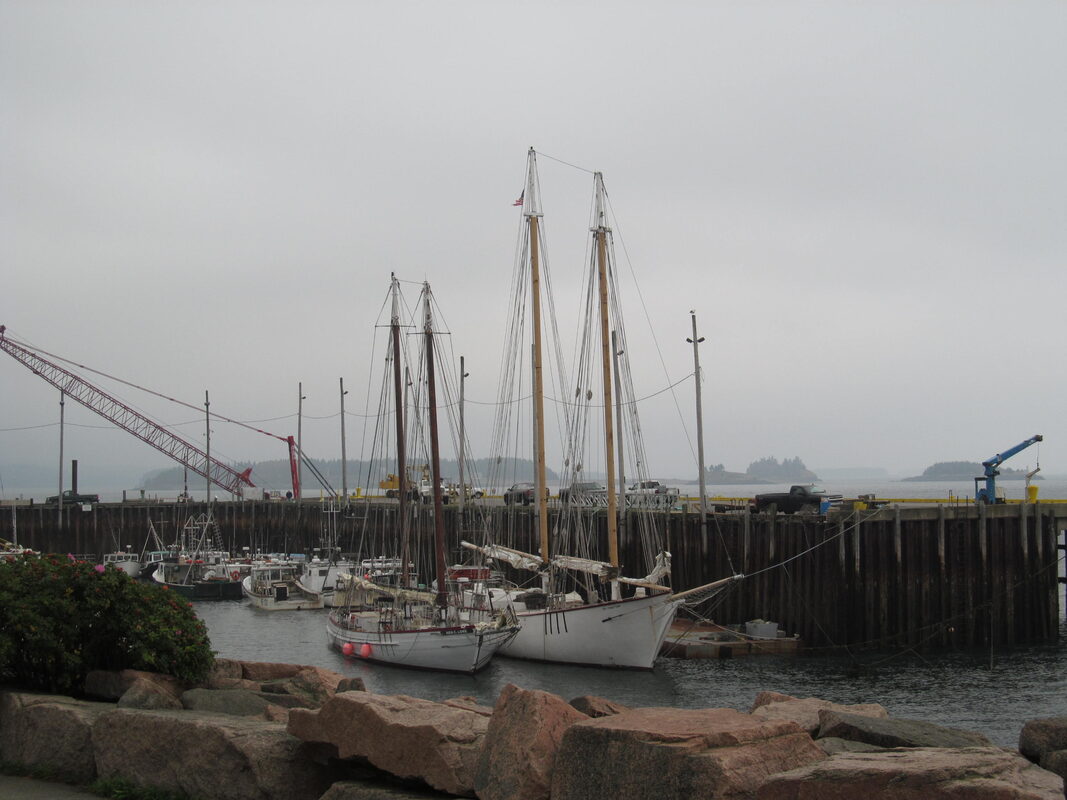
The deadline for comments and motions to intervene on a proposed tidal-powered subsea data center in the Western Passage near Eastport, Maine, passed at 5 p.m. Eastern Time on Oct. 19, 2026. By then the City of Eastport, the Passamaquoddy Tribe at Sipayik and the Conservation Law Foundation had all asked the Federal Energy Regulatory Commission to deny the developer's request. The application, from DeepGreen Western Passage SPV LLC, seeks a preliminary permit for Project No. 15424-000. In its Aug. 19, 2026 notice accepting the application for filing, FERC calls the project the "DeepGreen Western Passage Subsea-Compute & Infrastructure Hub." FERC has not yet ruled on the application.
What DeepGreen Proposed
DeepGreen filed the application on Feb. 11, 2026, under section 4(f) of the Federal Power Act and supplemented and amended it on June 8 and July 30, 2026. The July 30 filing answered a FERC deficiency letter issued July 15. According to FERC's notice, the project would be located in the Western Passage of the Bay of Fundy near Eastport, in Washington County, and would consist of:
- a 3.5-meter-high, 24-meter-wide subsea modular universal docking cradle;
- thirty-four subsea compute pods, each 12 meters long and 4.2 meters in diameter;
- a 1.8-meter-diameter spherical, elevated tidal sensing power platform;
- up to 16 marine hydrokinetic turbine-generator units, each rated at 300 kilowatts; and
- a 1.5-mile hybrid power-and-fiber subsea cable operating at 13.8 kilovolts.
The notice says the project "would be configured as a behind-the-meter captive generation loop without a grid connection." The notice also describes how narrow the requested permit is: its sole purpose is to give the holder priority to file a license application during the permit term, and it does not authorize land-disturbing activities or entry onto lands or waters owned by others without their permission.
Who Filed, and What They Said
City of Eastport
The Eastport City Council asked FERC to deny the application in comments dated Sept. 22 and docketed Sept. 30, 2026. The city had filed its motion to intervene on Sept. 29. In the letter, the council said that on Sept. 9, 2026, it "unanimously enacted ordinance provisions prohibiting large-scale data centers, including underwater data centers, within the areas covered by those provisions," and voted at the same meeting to intervene in the FERC proceeding.
The council acknowledged that a preliminary permit would not authorize construction. But it said a permit would give DeepGreen priority at the site for up to four years. The council said that priority should not be granted while questions about the project's feasibility, environmental effects, technical and financial capacity, public-safety implications and compatibility with the host community remain unanswered. It listed potential effects on fisheries, marine habitat, water quality, underwater noise, electromagnetic fields and equipment heat. Citing the notice's description of a captive generation loop, the council said the proposal as described does not establish that its electricity would provide a direct energy or grid-reliability benefit to Eastport residents.
Passamaquoddy Tribe at Sipayik
In its Oct. 19 motion to intervene and comments, the Tribe opposed both the application and the project. It describes itself as one of three communities of the Passamaquoddy Tribe, which it calls a sovereign and federally recognized Indian tribe. The Tribe says its fishermen maintain hundreds of lobster traps in and around the project area, which it places a few miles south of Sipayik. It argues that the project would impede access to the marine environment and interfere with sustenance and cultural fisheries for shellfish, finfish and eel. The Tribe also says construction and operating traffic would most likely use State Route 190, which it describes as bisecting Sipayik and having no sidewalks.
The Tribe also argues that FERC should deny the application because DeepGreen has not shown it can obtain a Maine submerged-lands lease or easement. It notes that such leases are generally unavailable for structures occupying 2,000 square feet or more. Citing DeepGreen's July response to FERC, the Tribe says the project's "concentrated footprint" is projected at 27.1 acres.
Conservation Law Foundation
The Conservation Law Foundation's Oct. 19 motion to intervene and comments ask FERC to deny the permit. CLF argues that because a statewide ban or other limits on data centers in Maine are likely, and Eastport opposes the project, it would be "unreasonable and inefficient" to grant the application. CLF's reasoning is that DeepGreen would struggle to show the compliance with state law that a FERC license requires. The group also says the project could harm critically endangered North Atlantic right whales and commercially important fish species, including Atlantic cod, Atlantic herring, Atlantic sea scallops, pollock and winter flounder. CLF says the project plans request a 400-acre thermal dilution zone.
Other filers
According to the FERC eLibrary docket for P-15424, other organizations that filed include:
- Center for Biological Diversity: motion to intervene on Sept. 24, followed by comments in opposition on Oct. 19 and Oct. 20.
- Save Passamaquoddy Bay: motion to intervene on Oct. 9 and comments in opposition on Oct. 13.
- Oceana: comments on Oct. 19 raising concerns about thermal effects on the surrounding waters.
- NOAA's National Marine Fisheries Service, Greater Atlantic Region: motion to intervene on Sept. 11.
- Ocean Renewable Power Company: comments on Sept. 14 and corrected comments on Sept. 16.
- Eastport Port Authority and New England Fishermen's Stewardship Association: motions to intervene on Oct. 19.
- Maine Department of Inland Fisheries and Wildlife: motion to intervene filed Oct. 20.
The docket also includes dozens of comments from individuals.
Context: Maine's Data Center Debate
CLF's filing places the Eastport proposal within a broader state debate. In April 2026, the Maine Legislature approved L.D. 307, which would have banned state and municipal permitting of data centers with a load of 20 MW or more until Nov. 1, 2027. In an April 24 veto letter, Gov. Janet Mills said the bill failed "to allow for a specific project in the Town of Jay that enjoys strong local support." CLF says she would have signed it with that exemption. CLF also cites a moratorium tracker that counts at least 14 other Maine municipalities that have banned data center construction and eight more that have proposed limits. It also cites a UMass Lowell survey of likely voters, taken Aug. 28 to Sept. 14, 2026, which found that 76% of Mainers oppose construction of AI data centers in their communities.
What Happens Next
FERC has not set a date for an order on the preliminary permit. If FERC issues a permit, DeepGreen would hold site priority for a term of up to four years and would still need a separate FERC license before building anything. At the state level, the Maine Data Center Advisory Council is due to submit its recommendations, including proposed legislation, to the governor and Legislature by Jan. 29, 2027, according to CLF's filing.
Sources
- FERC, Notice of Preliminary Permit Application Accepted for Filing and Soliciting Comments, Motions to Intervene, and Competing Applications, DeepGreen Western Passage SPV LLC, Project No. 15424-000 (Aug. 19, 2026)
- Conservation Law Foundation, Motion to Intervene and Comments Opposing Preliminary Permit Application, P-15424-000 (Oct. 19, 2026)
- Passamaquoddy Tribe at Sipayik, Motion to Intervene and Comments, P-15424-000 (Oct. 19, 2026)
- Eastport City Council, Comments in Opposition to the Application for Preliminary Permit, P-15424-000 (dated Sept. 22, 2026; docketed Sept. 30, 2026)
