
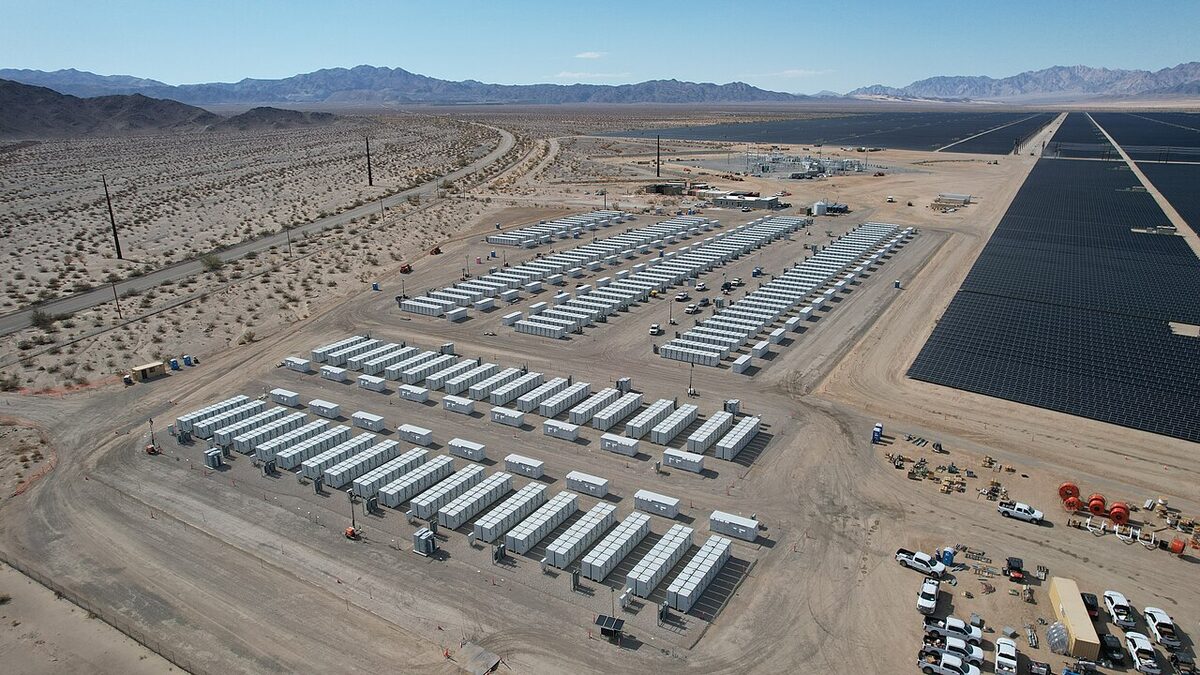
PJM Interconnection has accepted the first three generation projects into its temporary Expedited Interconnection Track (EIT): two ENGIE battery projects, one in Pennsylvania and one in Ohio, and a natural gas uprate in Adams County, Pa. The grid operator announced the selections in an Oct. 8 Inside Lines post. According to PJM, the three projects have a combined nameplate capacity of more than 2,100 MW, and all are slated to come online in mid-2029.
PJM described the track as one part of its broader response to supply and demand pressures, particularly from data centers and other large-load customers. The Federal Energy Regulatory Commission approved the EIT on June 9, 2026, Utility Dive reported.
The Three Projects
PJM listed the accepted projects as follows:
- Wayne 345 kV battery: an 860-MW battery storage project in Crawford County, Pa., in the PENELEC transmission zone, developed by ENGIE IR Holdings LLC.
- Galion 345 kV battery: an 800-MW battery storage project in Morrow County, Ohio, in the ATSI zone, also developed by ENGIE IR Holdings LLC.
- Hunterstown 500 kV natural gas upgrade: a 455-MW addition to an existing natural gas facility in Adams County, Pa., in the Met-Ed zone.
Utility Dive reported that the Hunterstown uprate would expand LS Power's 810-MW combined-cycle plant there, which LS Power bought from Platinum Equity in 2024.
Acceptance into the EIT puts a project on an accelerated interconnection path. It is not an executed interconnection agreement or a construction approval.
How the Expedited Track Works
The EIT is reserved for large new or uprated generation. According to PJM, a project must offer at least 250 MW of unforced capacity, which PJM describes as the amount credited for reliability purposes, and must have a commitment from a relevant state authority to help expedite site permitting. Projects must also be backed by a primary siting authority and be able to begin operating within three years.
The application window opened July 31, and PJM accepts requests on a rolling basis until the annual cap is reached. The grid operator will approve up to 10 interconnection requests per calendar year in 2026 and 2027, and the track sunsets at the end of 2027.
The state-commitment requirement is the track's distinguishing feature. Under the plan FERC approved in June, a state's governor can be considered a primary siting authority, according to Utility Dive. PJM CEO David Mills said at the time that the track "creates a clear opportunity for states to advance projects" through siting and permitting.
Why PJM Built It
PJM has tied the EIT directly to load growth. In its announcement, the grid operator linked the track to demand from data centers and other so-called "Large Load" customers. Utility Dive reported that PJM faces tight supply conditions, with little generation coming online in recent years, while rising demand, mainly from planned data centers, pushes its forecasts higher. That imbalance has driven a sharp rise in capacity costs, which has increased electric bills in some areas, the outlet reported.
The track did not reach FERC unopposed. Protests in the docket came from clean energy trade groups, the Illinois Commerce Commission, New Jersey's utility regulator, Vistra, community organizations and LS Power, the company behind the Hunterstown uprate, according to Utility Dive. In its order (eLibrary accession 20260609-3072), FERC dismissed as "speculative" concerns that the expedited process could delay PJM's regular interconnection reviews and raise network upgrade costs, and it rejected Vistra's argument that the readiness requirements favor utilities. Commissioner David Rosner said in a concurring statement that state efforts are required to build generation.
Context: A Grid Short on New Supply
The EIT is one of several PJM efforts to add supply. Utility Dive noted that it sits alongside a pending reliability backstop procurement for new generation, updates to surplus interconnection service rules that could let new generation use existing interconnection capacity, and the operator's reformed generator interconnection process. The first projects through the fast track split between storage and gas: according to PJM's list, the two ENGIE battery projects account for 1,660 MW of the total, while the Hunterstown project adds capacity at an existing gas plant.
What Happens Next
PJM expects each accepted project to execute a Generation Interconnection Agreement within 10 months of submission. The track remains open to further requests until it sunsets at the end of 2027. PJM's reliability backstop procurement remains pending, and no decision date has been published.
