
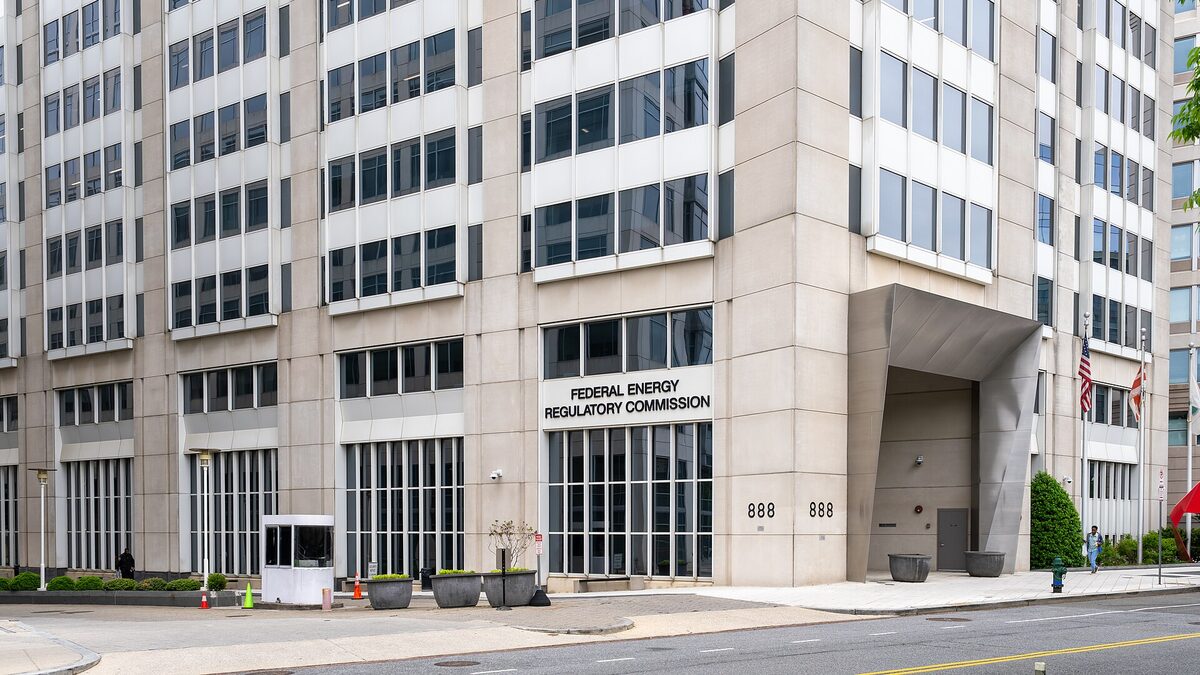
The Federal Energy Regulatory Commission has paused PJM Interconnection's plan to buy new generating capacity through a one-time Reliability Backstop Procurement (RBP). In an order issued Tuesday, Sept. 29, 2026 in Docket Nos. ER26-3380-000 and EL26-108-000 (196 FERC ¶ 61,245), the commission accepted the RBP for filing and suspended it for five months, to become effective Feb. 28, 2027, subject to refund. FERC also set a paper hearing and opened a Federal Power Act section 206 proceeding. On Wednesday, Oct. 7, the U.S. Department of Energy filed a statement of position in the case, urging PJM to adopt the reforms FERC identified so that large loads, not existing ratepayers, pay for the generation built to serve them.
FERC's order describes the RBP as a one-time procurement of new capacity to address resource adequacy challenges "primarily driven by an influx of large loads." PJM filed the proposal on July 31 and supplemented it on Aug. 14.
What PJM proposed
According to the PJM fact sheet on the proposal, the initial procurement target is the 6,831 MW shortfall from the capacity auction for the 2028/2029 delivery year. That target would be reduced to account for signed bilateral contracts for new generation and other showings of new supply, including integrated resource plans. Fixed Resource Requirement entities are excluded from the procurement and its cost allocation. Only new generation is eligible, along with new demand response and distributed energy resources subject to documentation, and every resource must begin commercial operation no later than June 1, 2032.
Selected resources could receive commitments of up to 15 years, with a maximum willingness to pay equal to an MW-weighted average of $555/MW-day. Costs would be allocated first to zones based on their pro rata share of the procurement target, then to load-serving entities (LSEs) within each zone. Had FERC accepted the filing without modification, PJM planned to take offers from Sept. 30 to Oct. 21, with gating and selection running from Oct. 22 to Dec. 2. In parallel, PJM is running a bilateral matchmaking process between new large loads and new generation, which followed a request for proposals it issued on June 9.
What FERC decided
FERC found some aspects of the proposal just and reasonable but said others may be unjust and unreasonable. It directed briefing on three issues: cost allocation, the rules for transmission owners that exit PJM, and collateral requirements for LSEs. Initial briefs are due 45 days after the order. The commission said it anticipates granting a motion to hold that briefing in abeyance if PJM submits a new section 205 filing within 30 days of the order, and it encouraged PJM "to swiftly submit a new FPA section 205 filing without delay."
On cost allocation, the order said PJM should employ the most up-to-date load and resource forecasts to inform the procurement target. Chairman Swett and Commissioners Rosner, See and LaCerte each filed a concurring statement.
The order also lays out the auction results behind the proposal. In December 2025, PJM announced that a Base Residual Auction had cleared significantly below its reliability requirement for the first time in the auction's history: the 2027/2028 auction came up 6,623 MW short. The largest driver was 5,250 MW of forecast load growth, nearly 5,100 MW of which was due to data centers, and the auction cleared at the temporary price cap of $333.44/MW-day.
DOE's filing
DOE's statement of position was filed under accession number 20261007-5181. Utility Dive reported that it appears to be the department's first filing at FERC in at least five years. "DOE shares the Commission's concerns that PJM's proposed [reliability backstop procurement] cost allocation model may be unjust and unreasonable," the department wrote.
"PJM should implement the cost allocation and other reforms identified by the Commission," DOE said. Citing the Ratepayer Protection Pledge, it added that "large electric energy loads — not American households or other business ratepayers — must fund" the generation and infrastructure those projects require.
DOE recommended that backstop costs be allocated using updated load forecasts and project-level tracking of large loads. It said a capability to continuously track whether a project enters into service, "or is delayed, reduced, or cancelled," would help assign costs to the customers responsible for them.
How the cost fight took shape
The backstop traces to January 2026, when the White House National Energy Dominance Council and the governors of all 13 PJM states issued a statement of principles urging PJM to hold a reliability backstop auction offering 15-year price certainty for new capacity, FERC's order recounts. That document called for costs to be allocated to LSEs with data centers that had not self-procured new capacity or agreed to be curtailable. PJM's filed design instead spreads costs across zones and LSEs, the step that both FERC's hearing and DOE's comments now target. The order also notes that PJM's 2026 load forecast, released in January, cut peak demand forecasts for summer 2027 and summer 2028 by 4,000 MW and 4,400 MW, respectively, citing tighter vetting of large-load adjustment requests.
What Happens Next
- Thursday, Oct. 22, 2026: PJM plans to hold a special Members Committee meeting, according to Utility Dive.
- By Thursday, Oct. 29, 2026: PJM intends to file a revised backstop procurement proposal at FERC, Utility Dive reported. That date closes the 30-day window in which FERC said it anticipates granting a motion to hold the paper-hearing briefing in abeyance.
- Friday, Nov. 13, 2026: Initial briefs are due, 45 days after the order, absent an abeyance. Responses are due 20 days later.
- Sunday, Feb. 28, 2027: The suspension ends and the RBP as accepted becomes effective, subject to refund and to the outcome of the paper hearing.
Sources
- FERC, Order Accepting Reliability Backstop Procurement and Establishing Further Procedures, PJM Interconnection, L.L.C., Docket Nos. ER26-3380-000 and EL26-108-000, 196 FERC ¶ 61,245 (Sept. 29, 2026)
- PJM, Fact Sheet: Reliability Backstop Procurement — PJM Board Proposal to FERC (updated July 2026)
- Utility Dive, "DOE presses PJM on ratepayer protections from large load costs" (Oct. 8, 2026)
