
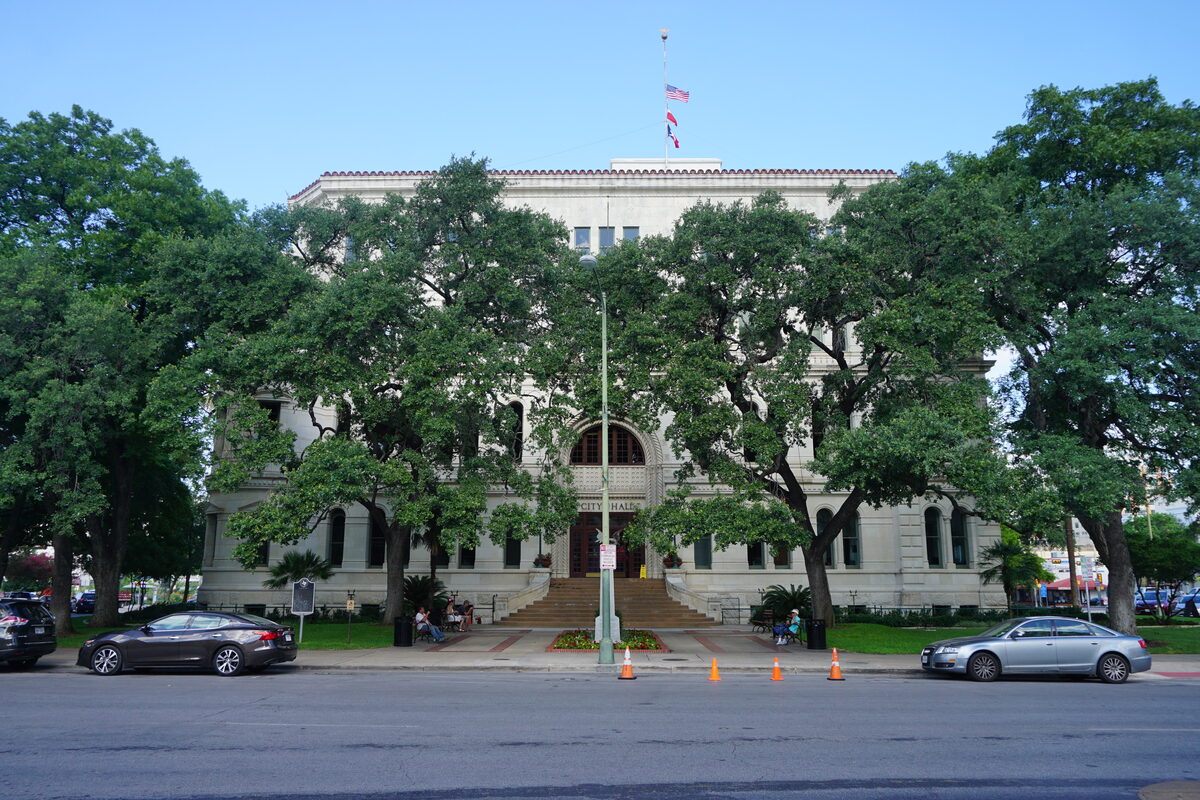
The San Antonio Zoning Commission holds a public hearing on Tuesday, Oct. 20, 2026, on proposed amendments to the city's Unified Development Code (UDC) that govern where and how data centers can be built. City Council is scheduled to take final action on Thursday, Oct. 29, according to an Oct. 15 City of San Antonio news release. Residents can sign up to comment at both meetings. One proposal under consideration would require a Specific Use Authorization for every data center, which means City Council would vote on each new project.
The hearing follows a City Council meeting on Wednesday, Oct. 14, where members discussed three options but took no vote. At least six council members, a majority, leaned toward the two options that require council approval, the San Antonio Report reported.
The three options
Option 1: by right. Data centers would be allowed without a council vote in commercial or industrial zones, provided they meet the code's standards. Those include 500-foot buffers from homes, schools, hospitals and assisted-living facilities, and a ban on building in the Edwards Aquifer Recharge Zone. Development Services Department (DSD) Director Amin Tohmaz presented this option, which has been under consideration since August.
Option 2: Specific Use Authorization. Every data center would need a Specific Use Authorization, so City Council would vote on each project. The San Antonio Report said this approach gives the city room to negotiate with developers. It is the approach Councilmember Ric Galvan (District 6) called for in the city's release.
Option 3: the mayor's proposal. Mayor Gina Ortiz Jones's version would require council approval and add specific standards: 1,000-foot setbacks, 45 days' notice before plans are filed, two public meetings, replacement of twice the green space eliminated, enclosed backup generators and air quality monitoring. Applications would also have to include projected energy and water use and a list of public benefits.
Taken together, the proposals "address concerns involving noise, lighting, emergency planning and environmental protections," according to the San Antonio Observer.
The city's release says DSD held a series of stakeholder meetings on changing the UDC and presented two proposals, one of them the Specific Use Authorization requirement.
What council members said
The review began with a Council Consideration Request that Galvan introduced last year, asking for a broad review of data center growth and its effects on natural resources and infrastructure. In the city's release, Galvan said, "The residents of San Antonio deserve to have a say in where and how data centers are built in our city," and "All new data centers within city limits should require a vote by City Council."
At the Oct. 14 meeting, Galvan said, "I do not believe that any by-right for data centers should be allowed in our city," according to the San Antonio Report. Ortiz Jones said the city should ask for what developers can afford, pointing to San Antonio's water, its ownership of its power utility and its available land.
Not every member supported a case-by-case vote. Councilmember Marina Alderete Gavito (District 7) said she is "definitely leaning towards option one so that there's some consistency," and Councilmember Marc Whyte (District 10) agreed with her, the San Antonio Report said. Both suggested a narrower definition of "data center."
Residents have also weighed in. A town hall at Northwest Vista College earlier that week, hosted by the Greater Edwards Aquifer Alliance and Public Citizen, drew more than 50 residents, who raised concerns about noise, air pollution and home values, the San Antonio Report reported.
What zoning can and cannot regulate
City staff have said the zoning code has limits. When the proposals came before a special council meeting in August, Tohmaz said the UDC could address noise and light pollution through setbacks and zoning rules, but that those policies "could not regulate resource use at data centers," according to an Aug. 25 San Antonio Report article. Tohmaz also said at least 12 projects already negotiating for utility service would be exempt from any moratorium. The moratorium idea drew a mixed reception, and council ultimately turned to land-use rules after a moratorium lacked support in August.
Context
Galvan's West Side district has "nearly a dozen" data centers, and more than $1 billion has been invested in data centers on Bexar County's western edge, outside city limits, the San Antonio Report reported. Cities in Texas have land-use authority over such projects but counties do not, the outlet noted. At the state level, Gov. Greg Abbott issued a statewide moratorium on Aug. 3 on data centers connecting to the power grid until ERCOT audits them; it does not apply to data centers with their own power sources, the San Antonio Report said.
What Happens Next
- Oct. 20, 2026: The Zoning Commission holds its public hearing on the UDC amendments, with public comment. Its recommendation is advisory and does not approve the changes.
- Oct. 29, 2026: City Council is scheduled to take final action on the amendments, with public comment, according to the city's release.
Which option, or which combination of provisions, will go to the council for a vote has not been published.
Sources
- City of San Antonio: D6 Councilmember Calls for Stronger Regulations on Data Centers (Oct. 15, 2026)
- San Antonio Report: San Antonio City Council weighs three ways to regulate data centers (Oct. 16, 2026)
- San Antonio Observer: San Antonio Residents Could Gain More Say Over Data Center Development (Oct. 18, 2026)
- San Antonio Report: San Antonio proposal regulating data centers; moratorium unclear (Aug. 25, 2026)
