
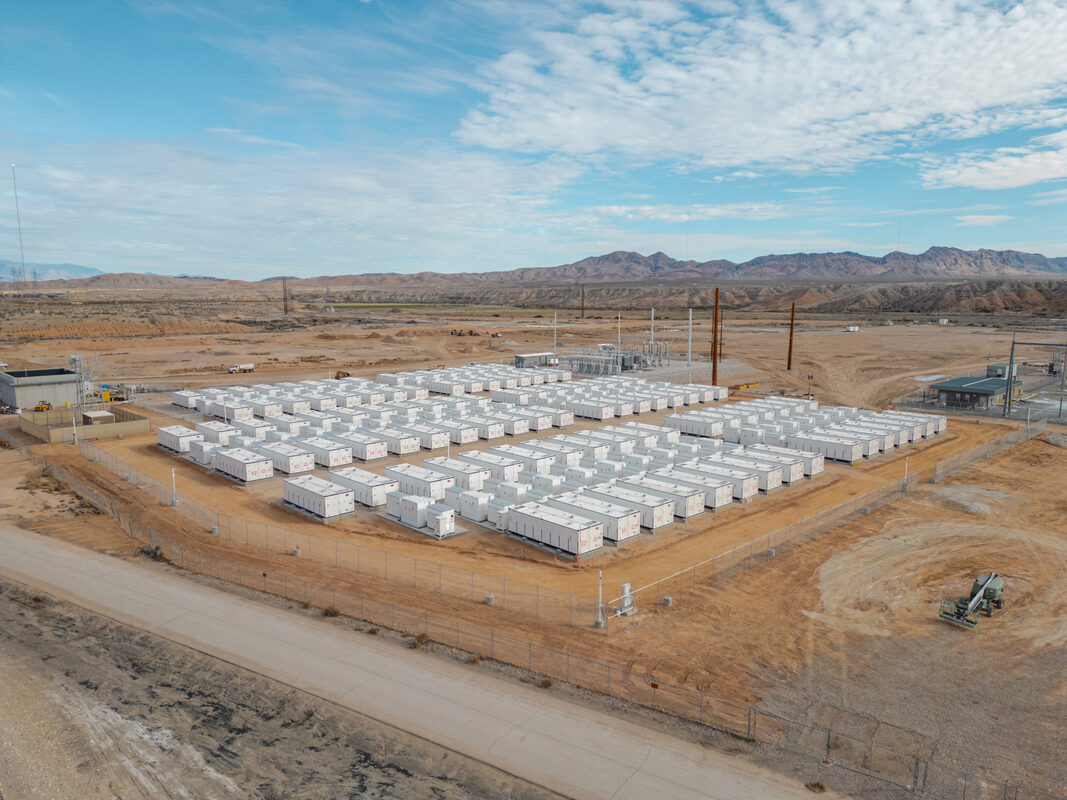
NVIDIA on Sept. 21, 2026, launched DSX Ready, which the company describes in an announcement on the NVIDIA Blog as a "qualification program for partner products and solutions" that meet the requirements of its DSX AI factory reference design. The program opens with two equipment categories: battery energy storage systems (BESS) and cooling distribution units (CDUs). NVIDIA said more categories across infrastructure and software will be rolled out over time.
Six vendors were qualified at launch. Hitachi Energy, LG Energy Solution and Tesla are listed for BESS. LG Electronics, LiquidStack and Vertiv are listed for CDUs.
Two categories, two qualification paths
The two categories are not qualified the same way. According to NVIDIA, BESS partners run the required qualification tests and submit supporting data to NVIDIA for review and approval within a defined qualification boundary. CDU providers instead use a self-qualification suite to determine whether an offering meets NVIDIA's applicable functional requirements.
NVIDIA's BESS self-qualification guidelines (version 1.0, dated May 28, 2026) cover battery systems that support AI load buffering, demand response and low-voltage ride-through (LVRT), "in grid-connected and islanded onsite generation modes."
The document lists five use cases: LVRT, dynamic AI transient reduction, demand response, source transfer and black start. Its stated objectives are to validate dynamic real and reactive power response, current limiting, ride-through, islanded stability, black start and seamless transitions between grid and island operation.
Data Center Frontier, in an Oct. 8 report on the program, said the BESS qualification consists of 12 tests, and that the AI buffering test requires steady-state tracking error within 2% of the commanded ramp magnitude.
Where the qualification boundary sits
NVIDIA's guidelines draw a narrow line around what is being qualified. The boundary sits at the AC terminals of the battery system, with the power conversion system (PCS) included, and the DC block topology falls outside it.
Other factors are left to the equipment maker or to other authorities. The guidelines state that "Battery sizing is irrelevant to qualification," and treat cell chemistry, which affects energy density, cycle life and cost, as an OEM decision. Safety is governed by the authority having jurisdiction and applicable regulatory bodies rather than by NVIDIA, with NFPA 855 and UL 9540A named. Cybersecurity is assigned to NERC CIP, IEC 62443 and the NIST Cybersecurity Framework.
Both NVIDIA sources state the limits directly: "Passing qualification does not imply site-level stability." The blog post adds that qualification does not replace site-level engineering. For CDUs, NVIDIA said a qualified unit may meet the relevant cooling criteria, but the builder still has to evaluate how it fits the planned facility.
The qualified products
The NVIDIA announcement names the vendors but not individual product ratings. Data Center Frontier's report supplies product-level figures:
- Vertiv: Its 2.3 MW CoolChip CDU was the first CDU qualified specifically under the program, according to Data Center Frontier.
- LG Electronics: Its qualified CDU is rated at 2.6 MW, the outlet reported.
- LiquidStack: Its GigaModular CDU platform is scalable up to 14 MW, per the same report.
- LG Energy Solution: Its qualified offering is a modular AC-coupled system built from 2.5 MW / 5.1 MWh storage blocks, the outlet said.
- Tesla and Hitachi Energy: Tesla's qualification covers its Megapack technology, while Hitachi Energy's offering emphasizes integrated storage, power conversion, automation and controls, according to Data Center Frontier.
Data Center Frontier quoted Scott Armul, Vertiv's chief product and technology officer, in its coverage of Vertiv's qualification announcement: "The scale of AI deployment is forcing a more integrated approach to data center infrastructure."
Follow-on announcements
On Sept. 28, a week after the launch, LG Electronics was named an NVIDIA Preferred Partner for power and cooling solutions, according to Data Center Frontier. The same day, Trane introduced two 250 MW AI factory thermal management reference designs based on the DSX platform, the outlet reported.
Trane's figures for those designs are projections, not measured results. Reference Design #506, which pairs direct-to-chip cooling with air-cooled chillers, projects up to 22 MW of added compute capacity, up to a 25% cooling efficiency gain and an annualized partial power usage effectiveness (pPUE) improvement from 1.201 to 1.083, according to Data Center Frontier. Reference Design #507, built on modular plants with water-cooled chillers and dry fluid coolers, projects a chiller power reduction of up to 16%, potentially freeing about 8 MW for AI workloads, and zero operational water usage effectiveness (WUE) through closed-loop dry cooling.
Context
The program also has new leadership on the NVIDIA side. Chris Malone joined NVIDIA in September as vice president of the DSX Platform, Data Center Frontier reported. He was previously head of data centers at OpenAI and also worked on data center infrastructure at Meta and Google, according to the outlet.
What Happens Next
NVIDIA has not published dates or named the additional infrastructure and software categories it plans to add to DSX Ready. LG Electronics plans to pursue qualification for a 4 MW CDU by the end of 2026, according to Data Center Frontier.
